Reclaiming the golden age charm
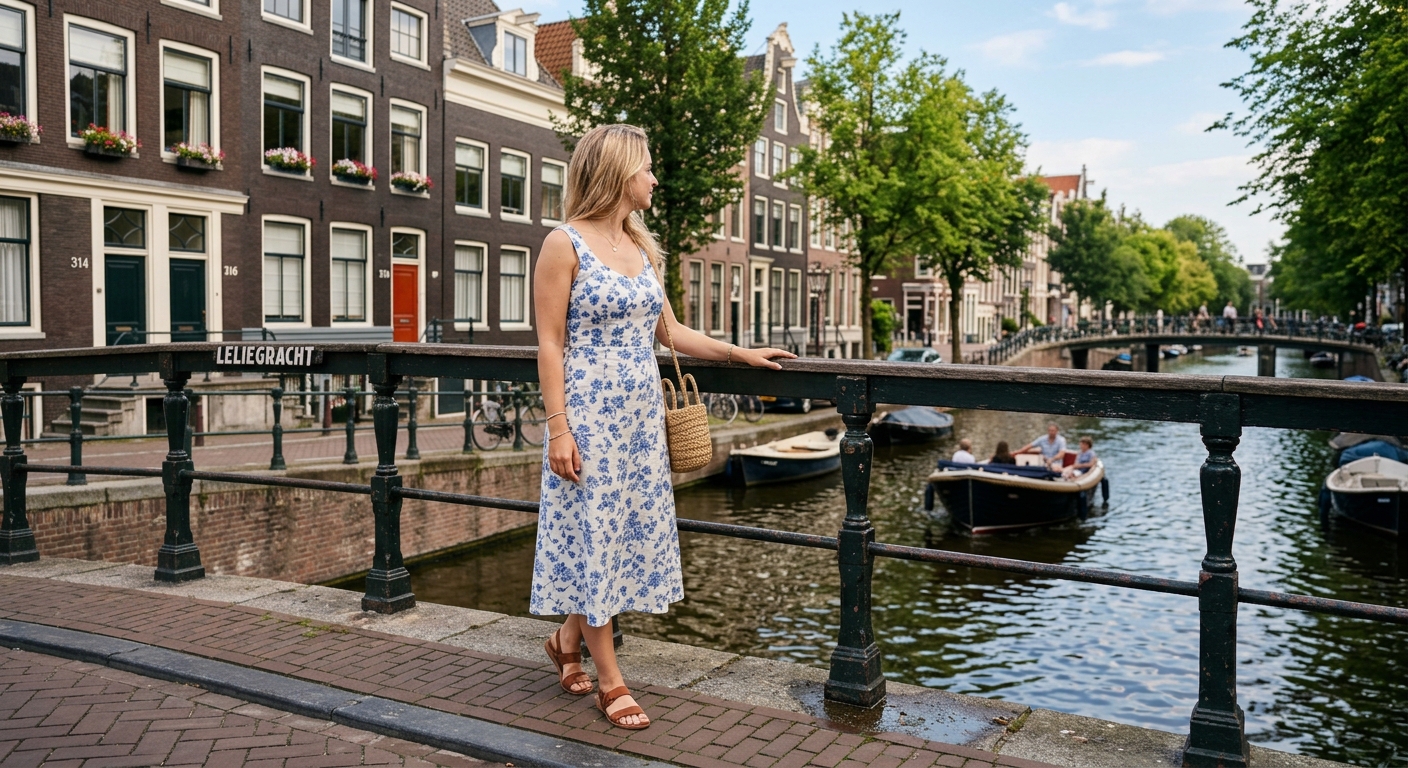
Amsterdam is a city defined by its water, its defiant tolerance, and an artistic legacy that punches far above its geographical weight. Yet, its unique concentric canal layout acts like a funnel, frequently trapping millions of visitors in a chaotic loop of stag parties, souvenir shops, and gridlocked narrow bridges. To find the soul of the city—what the Dutch call gezelligheid (a unique blend of cozy, social, and warm)—you must slip past the neon glow of the immediate center and explore the neighborhoods where real Amsterdammers ride their bikes, shop at street markets, and drink craft beer by the water.
Country: The Netherland
Inhabitants: 935.000
Tourists per year: 9.000.000 (overnights stays)
Tourist score: 9.6
Overtourism in Amsterdam
The historic center, particularly the Wallen (Red Light District) and the main artery of Damrak, can easily feel overwhelming due to sheer crowd density. Navigating these zones often means dodging slow-moving tour groups rather than enjoying the historic architecture.
By stepping slightly west or south, you can experience the historic canals with elegant ease. Swapping the heavily congested center for The Nine Streets (De Negen Straatjes) or the quieter stretches of the Prinsengracht allows you to wander along cobblestone paths lined with independent design boutiques, vintage stores, and quiet canal-side cafes.
For a deeply comforting, tranquil context, head further south to De Pijp or cross the IJ river to Amsterdam-Noord. In Noord, spaces like the Noorderpark offer lush greenery and open, peaceful waterways completely detached from the typical tourist routes. Here, the city opens up, giving you a quiet, authentic and residential glimpse into modern Dutch life.
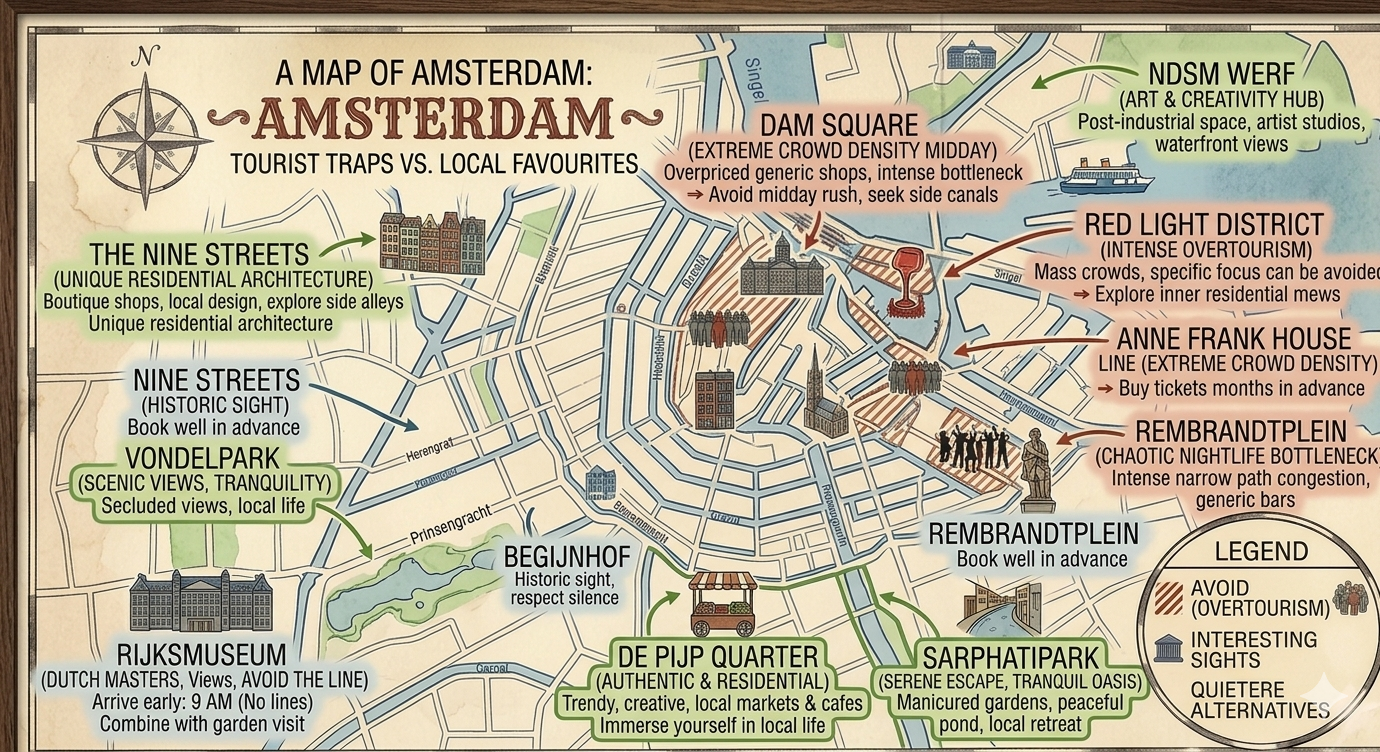
🚩 Top 5 Tourist Traps to Avoid
- The Midday Rijksmuseum & Van Gogh Line: Showing up at noon without a pre-booked, timed-entry ticket guarantees either a massive queue or complete rejection. The surrounding Museumplein becomes an intense bottleneck of tour buses and selfie sticks.
- Dam Square Eateries & Souvenir Shops: The restaurants and waffle shops immediately surrounding Dam Square and Kalverstraat are classic examples of high-cost generic eateries. The quality is low, the prices are steep, and the experience is entirely commercialized.
- The Red Light District (De Wallen) at Peak Nightlife: On a weekend night, this historic neighborhood turns into a chaotic gridlock of bachelor parties and pub crawls. The intense narrow path congestion makes it nearly impossible to appreciate the beautiful 14th-century architecture and hidden canals.
- Rembrandtplein & Leidseplein Nightlife: While famous for entertainment, these squares are largely packed with generic, overpriced Irish pubs, commercial clubs, and aggressive fast-food joints catering strictly to transient crowds.
- Main Street Waffle & Cheese “Museums”: Scattered across the center are dozens of flashing, neon-lit shops masquerading as authentic Dutch cheese or stroopwafel museums. They are simply high-markup retail spaces selling mass-produced items you can buy for a fraction of the price at a local supermarket.
🏠 Top 5 Local Favorites (Authentic Hidden Gems)
- The Begijnhof Garden: Tucked behind a heavy, inconspicuous wooden door right near the bustling Spui, this medieval courtyard is a historic sanctuary. It serves as a strict zone of silence, offering an incredibly peaceful, serene escape right in the heart of the city.
- NDSM Wharf (NDSM-werf): Take the free ferry behind Central Station to this former shipyard turned post-industrial creative hub. It features massive street art murals, artist studios, and waterfront hangouts like Pllek, where locals sit around beach bonfires looking across the water.
- Sarphatipark: While tourists swarm the massive Vondelpark, locals in the trendy De Pijp neighborhood head to this English-style pocket park. It’s a beautifully manicured green space complete with ponds, bridges, and a much quieter, community-focused energy.
- Ons’ Lieve Heer op Solder (Our Lord in the Attic): Instead of the massive museum lines, visit this completely preserved 17th-century canal house. Hidden entirely within the top floors is a secret, illegal Catholic church built during the Reformation—a breathtaking and quiet look into Amsterdam’s history of tolerance.
- Westergasfabriek & Westerpark: A sprawling green park built around a collection of historic, industrial gasworks buildings. It now hosts independent cinemas, local breweries, and artisan coffee shops, acting as a major cultural playground for locals without the central city crowds.
🚴 Non-Tourist Cycling Tour Amsterdam
To truly experience Amsterdam, you have to get on a bike. In Amsterdam, the bike lane is an extension of the highway system. Amsterdammers use their bikes to commute to work, transport children, and move at high speeds. But if you follow the standard tourist maps, you will quickly find yourself trapped in a nerve-wracking slalom of overcrowded canal paths, selfie sticks, and bewildered pedestrians. That is not the Amsterdam the locals love.
The real magic of the city lies just beyond the perimeter of the medieval center. It is found in the neighborhoods where Amsterdammers actually live, work, and relax—where the streets open up, the architecture gets bold, and the cafes serve local brews instead of overpriced tourist traps.
This curated cycling route bypasses the chaotic Bottleneck of the Damrak and the gridlock of the central canal ring. Instead, we will take you on a journey through the city’s best-kept secrets. You will glide through the serene, historic canals of the Westelijke Eilanden (Western Islands), catch a free ferry across the IJ river to explore the raw, creative energy of Amsterdam-Noord, and cruise back through the lush, wide-open green spaces of the Flevopark and the vibrant, multicultural Indische Buurt in the East.
Put on your jacket, check your brakes, and get ready to discover the authentic, spacious, and laid-back Amsterdam that the guidebooks completely miss. This is Amsterdam through the eyes of a local.
📅 Best Time to Visit
To catch the city at its most scenic while skipping the peak summer cruise ship traffic, aim for these windows:
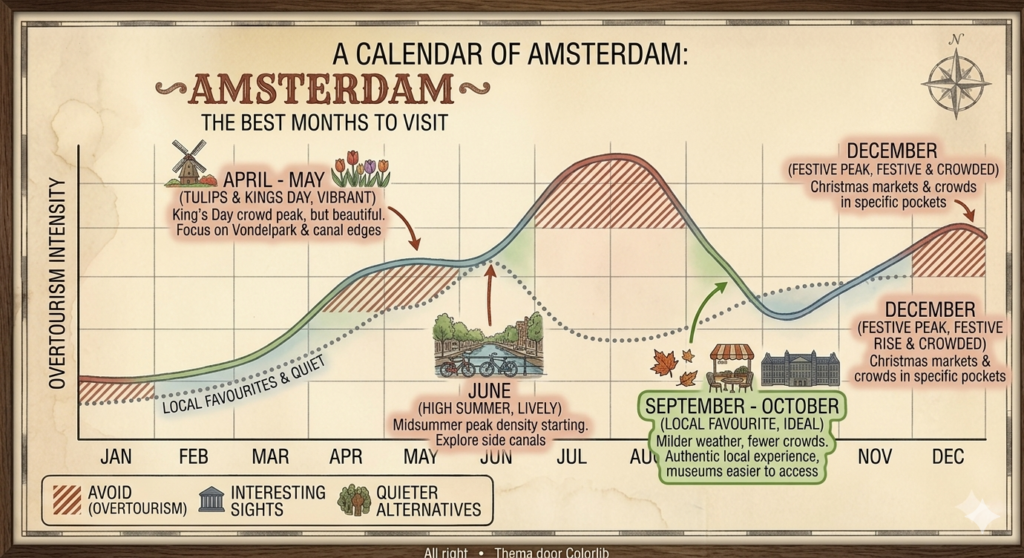
- Mid-April to May: The spring brings tulips to the city’s window boxes, the terrace cafes open up along the canals, and the daylight lingers. (Tip: Avoid April 27th unless you are explicitly looking for King’s Day—the biggest, most chaotic city-wide street party of the year).
- September to October: The summer rush dissipates, the golden autumn sun hits the elm trees lining the canals, and the city transitions into its cozy, candle-lit evening charm.
🏛️ The Alternative City: Utrecht
If you love the classic charm of Dutch canals but want to experience them completely free from the pressures of mass global tourism, take a 25-minute train south to Utrecht.
Utrecht features a stunning medieval old town built around unique, bi-level canals where ancient wharves sit directly at water level, now serving as cozy, quiet cafes and terraces. The city boasts a vibrant, youthful energy driven by its large university population, yet its historic streets retain a tranquil, ancient context. It offers the quintessential Dutch canal experience with gorgeous architecture, local markets, and a peaceful pace that allows you to wander in complete tranquility.
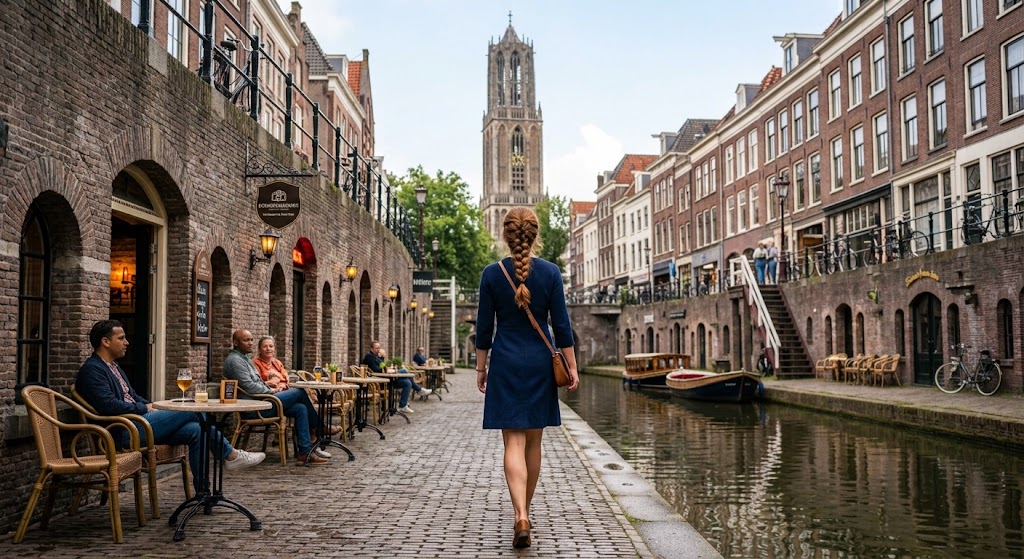
Canal ‘oude Gracht’ in Utrecht
🚴 The Ultimate “Non-Tourist” Amsterdam Bike Route
To truly experience Amsterdam, you have to get on a bike. But if you follow the standard tourist maps, you will quickly find yourself trapped in a nerve-wracking slalom of overcrowded canal paths, selfie sticks, and bewildered pedestrians. That is not the Amsterdam the locals love.
The real magic of the city lies just beyond the perimeter of the medieval center. It is found in the neighborhoods where Amsterdammers actually live, work, and relax—where the streets open up, the architecture gets bold, and the cafes serve local brews instead of overpriced tourist traps.
This curated cycling route bypasses the chaotic Bottleneck of the Damrak and the gridlock of the central canal ring. Instead, we will take you on a journey through the city’s best-kept secrets. You will glide through the serene, historic canals of the Westelijke Eilanden (Western Islands), catch a free ferry across the IJ river to explore the raw, creative energy of Amsterdam-Noord, and cruise back through the lush, wide-open green spaces of the Flevopark and the vibrant, multicultural Indische Buurt in the East.
Put on your jacket, check your brakes, and get ready to discover the authentic, spacious, and laid-back Amsterdam that the guidebooks completely miss. This is Amsterdam through the eyes of a local.
🏛️ You might also like
If Amsterdam’s bustling energy still feels a bit too intense—even with our local shortcuts—there are plenty of incredible destinations across Europe where you can trade the standard tourist bottlenecks for true cultural depth.
- If you are looking for that classic, fairytale charm without the stifling tour groups, head over to Gent, Belgium’s vibrant medieval rebel that completely outshines its manicured neighbor, Bruges.
- Alternatively, dive into Europe’s massive capitals through a totally different lens: skip the crowded West End and explore Londen via its quiet, industrial canal paths in the East.
- Sidestep the grand boulevards of Paris to discover hidden covered passages and hilly, village-like artistic neighborhoods.
- If you prefer grit and counter-culture over tourist traps, learn how to navigate Berlin like a local by trading Checkpoint Charlie for open-air community parks and independent street art hubs.
- Even right down the road in Belgium, you can skip the commercial European Quarter and find the real, diverse soul of Brussels tucked away in the vibrant, historical markets of the Marolles district.